

On International Day of Peace, we meet the outreach workers, coordinators, and specialists behind the Khalid Bin Sultan Al Qasimi Humanitarian Foundation’s (KSQF) child protection programmes; the people who build safety, one small act of trust at a time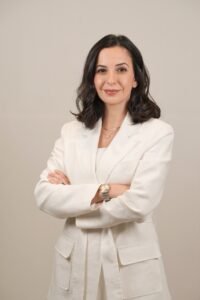
For a child at risk, safety can begin with one person. The outreach worker who made first contact. The coordinator who navigated the paperwork. The teacher who noticed a child was struggling.
Violence and conflict cost the global economy an estimated $21.81 trillion last year, roughly 10.5% of global GDP. Today, 103 countries are engaged in external or internationalised conflicts, nearly double the number since 2008. Behind those figures are children whose safety depends on people who do this work largely without recognition.
This year’s International Day of Peace, marked on 21 September, centres on the UN’s theme of “Invest in Peace – For Everyone, Everywhere, Every Day” that honours “everyday architects of peace.” A description that fits the people across the programmes supported by KSQF, whose quiet, consistent effort strengthens safety, dignity and connection within their communities, often far from any spotlight.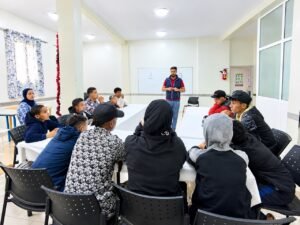
Some of these hands are visible but many are not. A community worker who notices something is wrong, a health worker who knows how to respond to violence, or a volunteer who earns a young person’s trust.
Established in Sharjah in 2024, the Foundation works with local and international partners on programmes addressing violence, exploitation, trafficking, hazardous child labour and other threats to children’s safety, bringing together the many hands that each child’s protection requires.
It starts with trust
In Morocco, KSQF supports Bayti Association’s outreach to vulnerable children. Ms. Yamna Taltit, Director of Bayti Association explains, “The first challenge is often gaining the child’s trust. We cannot assume that a child will naturally accept help simply because it is offered. Some have already been disappointed or have lost faith in adults. Therefore, we need to take time to build this trust: standing by their side, listening without rushing them, understanding their lived experiences and their suffering, and at times simply offering a reassuring, constant presence. The moment a child finally realizes they are no longer alone and can count on someone, they break the cycle of exclusion and embark on a process of change. For many of them, it may be the first time they feel that someone is genuinely there for them.”
KSQF also partners with Fondation Amane Pour l’Enfance (FAPE) to reach children and families in remote communities in the Sous-Massa region. FAPE provides psychosocial care, legal guidance, birth registration and school reintegration through two mobile teams.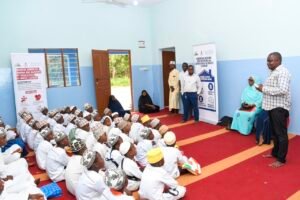
For El houssaine Bidouh, a social worker, much of this work takes place behind the scenes. “Protecting a child often means overcoming barriers that are not always visible. Sometimes, it is about helping a family complete the right procedures, obtain missing documents, connect with the appropriate services, or overcome legal and administrative obstacles. These steps may seem simple, but for a child and their family, they can make the difference between accessing their rights and being left without support. Our role is to stay alongside them until those barriers are overcome.”
A space to breathe
In Mexico, KSQF partnered with Plan International on the Guardians of Children programme, reaching migrant children and adolescents in Tapachula, Mexico City and Ciudad Juárez. Safe spaces, psychological first aid and mobile health units are part of what the programme offers. But so is something simpler: a place where a child can just be a child.
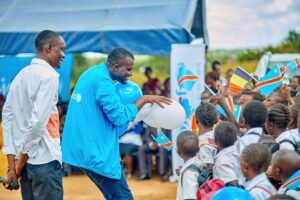
Built and equipped by UNICEF, the school will provide 500 pupils with equitable access to quality education.
For children living with the uncertainty of displacement, play can create space for expression. Hiyarime, Creative Workshop Facilitator, sees the change as children gradually begin to engage. “For a child who has been displaced, play can be the first language that comes back. Words are often too hard to find but a game isn’t. You watch a child who arrived silent and withdrawn start to interact, laugh, reconnect with the people around them. Building that sense of safety takes patience but the moment it happens, you can see a child becoming a child again.”
Protection beyond the immediate crisis
In the Democratic Republic of the Congo, economic hardship can expose children to another form of risk. In June 2026, KSQF and UNICEF announced a programme addressing child labour in informal mining in the Kambove Health.
Many people contribute to that effort. Anny Tchowa, Chief of the Lubumbashi office, notes that what education offers a child goes beyond the classroom. “Behind each child who steps away from a mine and into a classroom is a chain of support made up of families, teachers, and social workers whose work continues long after the immediate moment has passed. Yet helping a child leave mining is only the first step; keeping them permanently out of mining is often the greatest challenge. Poverty, economic pressures, and limited opportunities can pull children back into hazardous work, making sustained support for families, access to quality education, and long-term community engagement essential to protecting every child’s future.”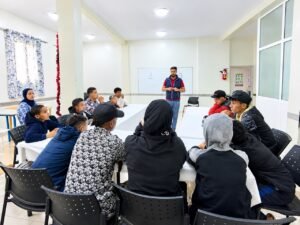
Behind each child who steps away from a mine and into a classroom is a chain of support made up of families, teachers, social workers whose work continues long after the immediate moment has passed.
The words behind the work
How children who have experienced exploitation or abuse are described can shape how their experience is understood.
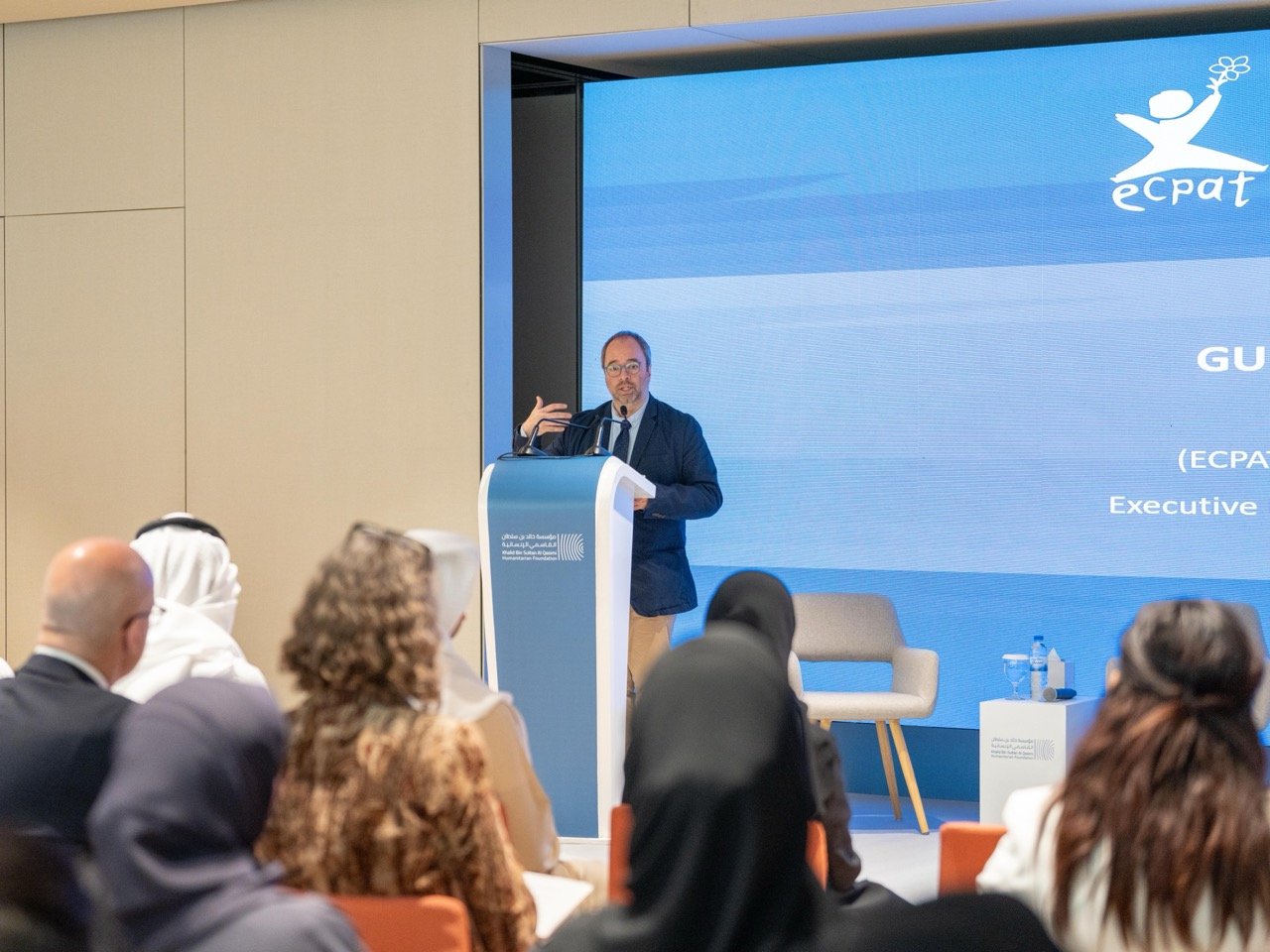
Guillaume Landry, Executive Director of ECPAT International puts it plainly. “We recognise the importance of words. They shape policy, they influence justice—but they also affect how children are understood and treated. When we talk about child sexual exploitation and abuse, we must use language that respects children’s rights and does not reinforce harm. Each of us has a role to play in using language responsibly.”
Many hands, one purpose
In 2025, KSQF-supported programmes reached more than 36,000 people across Morocco, Mexico and Zanzibar. That reach has since extended to the Democratic Republic of the Congo, where children exposed to hazardous labour in informal mining are now also being supported.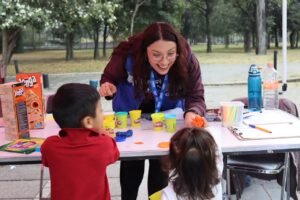
Lujan Mourad, Director of Khalid bin Sultan Al Qasimi Humanitarian Foundation says, “Peace is not something we deliver from a distance. It is built by the people on the ground who show up for a child, day after day. Their work, not ours alone, is the reason any of this is possible. On this International Day of Peace, our gratitude goes to them.”
For a child, that peace may mean finding someone they can trust after being let down, having a space where they can laugh and play after displacement, or leaving a dangerous workplace for a school desk from which they can imagine a different future. Its impact can be seen in a child who begins to speak, returns to school or finally feels safe enough to laugh again.