

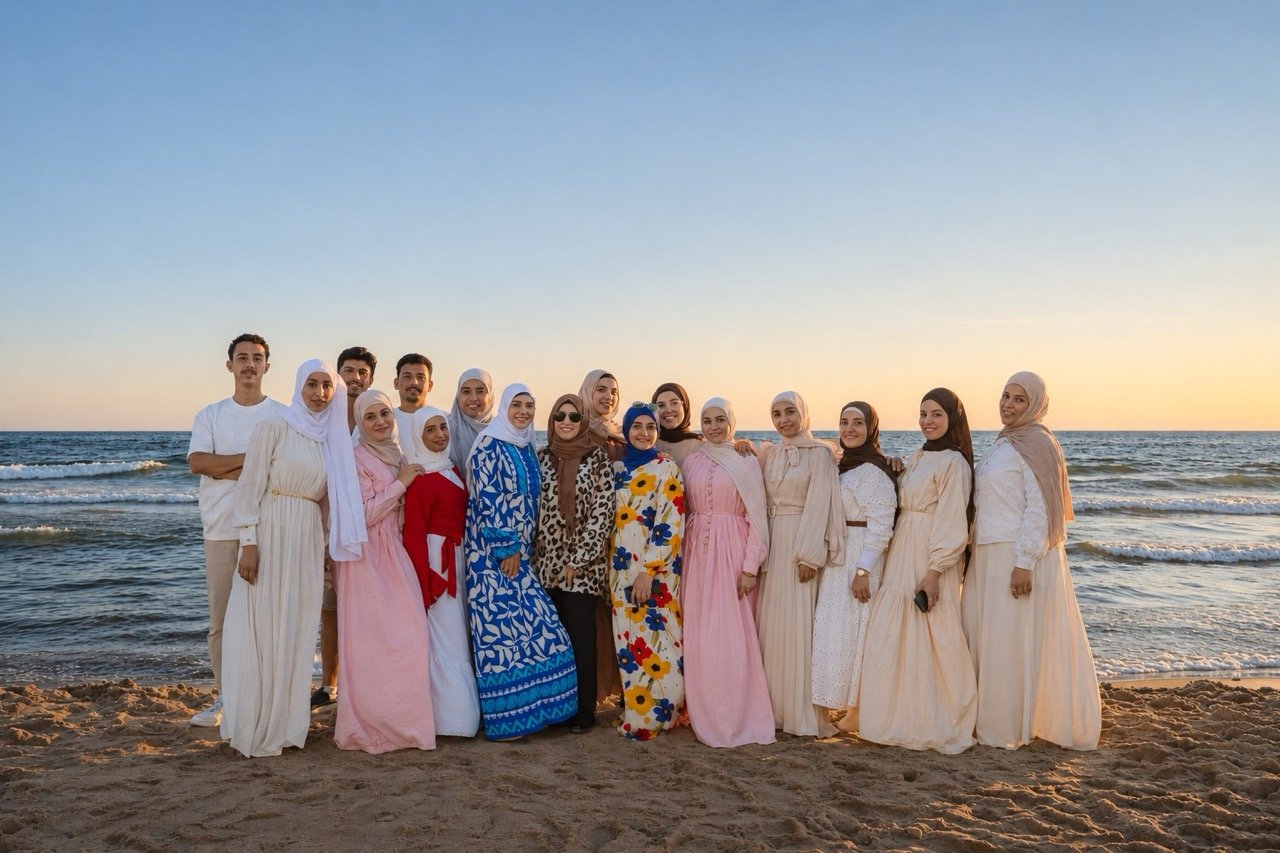
- Mariam Al Hammadi: SIARA recognises humanitarian interventions that go beyond immediate relief to address long-term challenges and give displaced young people the means to change their lives.
- 10th Sharjah International Award for Refugee Advocacy and Support recognises
pioneering education model for displaced teenagers, selected from 736 nominations across 57 countries
- Alsama Project has reached 3,277 students since its establishment, with 90% joining unable to read or write and most achieving literacy within six months.
- The world’s first WASC-accredited non-formal refugee education program, Alsama has created internationally recognised pathways to higher education for displaced youth.
- 16 graduates have progressed to higher education, including students at universities in Canada, the UK, India and Lebanon, as well as through Cambridge’s online program
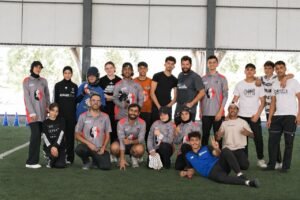
The Sharjah International Award for Refugee Advocacy and Support (SIARA) has named Lebanon’s Alsama Project the winner of its 10th edition, recognising its pioneering education model that helps displaced teenagers progress from illiteracy to university.
Organised by The Big Heart Foundation (TBHF) in collaboration with the United Nations High Commissioner for Refugees (UNHCR), the award honours an initiative that began in 2020 with 40 Syrian refugee girls excluded from formal education in Beirut’s Shatila refugee camp.
Since then, Alsama has reached 3,277 students, 90% of whom were unable to read or write when they joined, with most achieving literacy within six months. Its accelerated education programme has also become the world’s first non-formal refugee education programme to receive accreditation from the Western Association of Schools and Colleges (WASC), opening internationally recognised pathways to higher education.
Selected from 736 nominations spanning 57 countries across five continents, Alsama was recognised for its ability to help displaced young people recover lost years of schooling and access opportunities previously beyond their reach. To date, 16 graduates have progressed to further education, including two at the University of British Columbia and York University in Canada, one at the University of Leicester in the UK, one at Ashoka University in India, nine at the Modern University for Business and Science (MUBS) in Beirut, and three pursuing online studies through Cambridge PACE.
Education as protection, not only opportunity
The recognition comes at a time when millions of displaced children remain excluded from education. According to UNHCR’s 2026 Refugee Education Report, 5.8 million refugee children, representing 44% of the world’s school-aged refugee population, were out of school in 2025, while only 32% were enrolled in secondary education.
Children who remain outside education face consequences that extend far beyond lost learning, including increased vulnerability to child labour, exploitation, early marriage and prolonged poverty. These risks are particularly serious for displaced girls. UNICEF estimates that approximately 12 million girls worldwide are married before the age of 18 each year, with limited access to education among the factors that perpetuate the practice.
Her Excellency Mariam Al Hammadi, Advisory Board Member of The Big Heart Foundation, said: “When children are denied education, their choices narrow, and their vulnerability to exploitation, child labour and early marriage increases. For those displaced by conflict, years spent outside school can shape the course of their entire lives. We chose to recognise Alsama Project because it challenges the idea that lost years of education must mean lost opportunities. It demonstrates that young people who have been excluded from learning can reclaim their right to education and build a future on their own terms. This is the kind of humanitarian intervention SIARA seeks to recognise, one that goes beyond responding to immediate needs to address the conditions that perpetuate vulnerability and give young people the means to change the direction of their lives.”
From 40 refugee teenagers to an internationally recognised education model
Alsama’s educational model began with a request from young people at its first empowerment centre in Shatila refugee camp. Many had never attended school, while others faced the prospect of early marriage. When they expressed their desire to complete their education, Alsama developed a programme that builds foundational literacy and numeracy skills in just six months, followed by a six-year pathway to Grade 12-equivalent education.
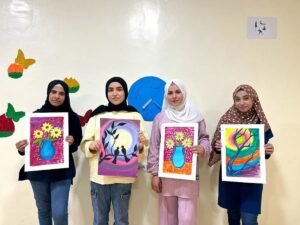
Today, Alsama operates five education centres across Beirut, Lebanon, and Homs, Syria, four of which (Shatila 1, Shatila 2, Bourj 1 and Bourj 2) are accredited by the Western Association of Schools and Colleges (WASC). Shatila 1 is the only centre accredited through Grade 12, opening further opportunities for students to pursue higher education.
Creating new routes to university through G12++
Building on its accelerated education model, Alsama developed G12++, an innovative high school-equivalent qualification designed for displaced learners whose education has been disrupted and who may lack the academic records required by conventional education systems. Developed with support from Cambridge University Press & Assessment, the qualification assesses both academic achievement and essential life skills, offering an alternative route for students to demonstrate their abilities to universities, vocational training institutions and employers.
G12++ has been independently benchmarked by Ecctis, a UK-based qualifications recognition agency, against Levels 2 and 3 of the UK’s Regulated Qualifications Framework for eligible subjects. These levels broadly correspond to GCSE and A-level standards, respectively, providing an internationally understood reference point for evaluating students’ academic capabilities.
Following a beta test involving 183 students, the first official pilot took place in February 2026 with 17 students from Shatila refugee camp. A wider international pilot involving both Alsama students and external candidates is planned for February 2027, marking another step towards establishing a scalable educational pathway for young people affected by displacement.
Beyond academic education, Alsama also supports students’ personal growth and leadership development through its Leadership Through Cricket programme.
A decade of recognising humanitarian solutions
Established in 2017 under the patronage of His Highness Sheikh Dr Sultan bin Mohammed Al Qasimi, Supreme Council Member and Ruler of Sharjah, and Her Highness Sheikha Jawaher bint Mohammed Al Qasimi, Wife of His Highness the Ruler of Sharjah, Chairperson of The Big Heart Foundation and UNHCR Eminent Advocate for Refugee Children, SIARA has received more than 3,000 nominations from nearly 70 countries over the past decade.
Alsama joins nine previous recipients recognised for their contributions across education, healthcare, protection, social inclusion, livelihoods and other humanitarian fields, reflecting the award’s commitment to recognising sustainable solutions that improve the lives of refugees and displaced communities.
The AED 500,000 prize is funded entirely by The Big Heart Foundation, with no public donations used to finance the award. The funding aims to support the winning organisation’s growth and long-term impact. For Alsama, the recognition comes as it works to expand accredited secondary education for displaced youth and advance G12++ as a recognised pathway to higher education and skilled employment.